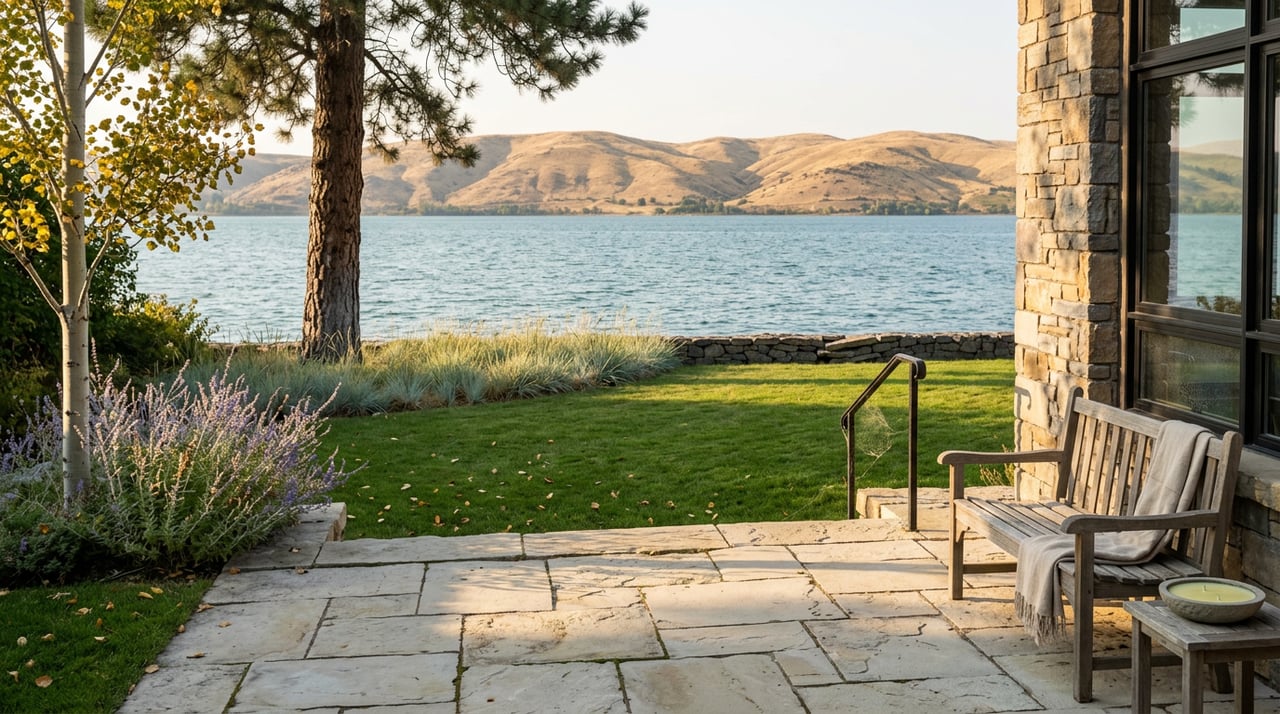
A listing photo shows a dock. Weathered boards, a boat lift, maybe a canoe tied off at the end. To most buyers touring Lake Chelan waterfront, that photo answers the question before it's asked: yes, this home comes with water access.
It doesn't always work that way.
On Lake Chelan, "the house has a dock" can mean three very different things depending on where the property sits, and each one carries a different level of certainty about what you'll actually be able to do with it after closing. Some docks are private structures permitted to that specific parcel. Some are shared moorage controlled by a homeowners association, where the house buys you a position in a system rather than a titled asset. And some slips aren't attached to any house at all. They're a separate piece of real property that happens to sit near the water, bought and sold on their own.
Buyers who assume all three are the same thing find out otherwise at the worst possible time, usually somewhere between the inspection period and the closing table.
Three Things People Call "a Dock"
Look closely at how moorage actually works around the lake and the differences show up fast.
| Type | How it's held | Real example |
|---|---|---|
| Private permitted dock | Tied to the parcel, built and maintained by the owner under county and state permits | A Lake Chelan parcel with an existing crib-style dock replaced with a smaller pile-supported structure to match current shoreline rules |
| HOA or association moorage | Shared slips governed by CC&Rs, allocated by the association rather than deeded to a single home | Cove Estates Moorage Owners' Association on the South Shore operates 76 boat slips for 65 separate condominium and mobile home lot owners, with limited slips available for annual lease |
| Individually owned marina slip | A separate deeded or licensed asset that can be bought, sold, or rented independent of any home | Sunset Marina near downtown Chelan holds 168 individually owned slips, many of which owners make available for rent to visiting boaters rather than reserving for personal use |
That middle row is where most surprises happen. A ratio of 76 slips to 65 owners at Cove Estates sounds like plenty of room today. It also means the association, not the parcel deed, decides who gets a slip, how costs are split, and what happens when demand tightens. Buying the house does not automatically buy you the water. It buys you a place in the queue, governed by rules you won't find in the MLS listing. You'll find them in the CC&Rs, if your agent thinks to ask for them before you write an offer.
Crystal View Estates, another Lake Chelan community, took a more engineered approach: its HOA built out 61 slips behind a 456-foot wave attenuator designed to handle four-and-a-half-foot waves. That's a real capital asset the association owns and maintains, which means real reserve funding questions for anyone buying into that community, separate from anything the house itself needs.
The Line That Decides Whether You Need a Permit at All
Say the dock is legitimately yours, tied to the parcel, no association involved. The next question isn't whether you can use it. It's what happens when it needs work.
Washington's general threshold for what counts as "substantial development" under the Shoreline Management Act sits at $8,504, a figure the state adjusts for inflation every five years. Cross that dollar amount in fair market value of construction cost and you generally need a full Shoreline Substantial Development Permit, with public comment periods and agency review.
Docks get a specific carve-out. Effective August 5, 2023, the threshold for replacing an existing dock jumped to $28,000, as long as the new structure is the same size or smaller than what it's replacing and the county's shoreline program meets current state guidelines. That's not a small gap. It means a straightforward like-for-like dock replacement can often clear inspection and repair without triggering the full permit process, while the same dollar amount spent on a new dock, or one built even a few feet larger, cannot.
A real permit file from a Lake Chelan property shows how this plays out in practice: an existing 1,044-square-foot crib-style dock came out, replaced by an 815-square-foot pile-supported structure, narrowed specifically to comply with current shoreline width standards. The owner didn't get to rebuild what was there. They got to rebuild something smaller that fit today's rules, in the same footprint, with the same effort and cost as maintaining a larger dock might have taken years ago.
That's the pattern worth understanding before you make an offer, not after. If a listing's dock looks oversized for a modern permit, it probably is, and any future replacement will likely come back smaller.
Why the Permit Takes Longer Than the Repair
Even a straightforward dock project rarely moves at the pace of home renovation. A local dock contractor's own FAQ page puts realistic permitting timelines at six months to a year, not because the physical work takes that long, but because of the number of agencies that have to sign off. A new dock or a boat lift on Lake Chelan typically needs county approval, a Hydraulic Project Approval from the Washington Department of Fish and Wildlife, and often US Army Corps of Engineers review, coordinated through a joint permit application rather than filed separately with each office.
There is one piece of good news buried in that timeline. Unlike shoreline work on the Columbia River, which is restricted to the October through February window to protect fish runs, Lake Chelan shoreline work can happen year-round. The bottleneck isn't the season. It's the number of desks a single application has to cross.
If you're closing on a home where the seller has promised a dock repair, or where you're planning one yourself in year one, that six-to-twelve-month window matters more than the contractor's quoted install time. Budget for the paperwork, not just the pilings.
Rules on a Clock
None of this is frozen in place. Washington law requires every county's Shoreline Master Program to go through periodic review and update. Chelan County's is currently scheduled for its next full review by 2031, part of a state legislative schedule extended in 2023 that gave counties an additional year across the board.
That update cycle has mattered before. Chelan County ran its last major update process in 2017 and 2018, and the resulting changes, which reduced buffer widths along the county's lakes and streams by roughly half and altered shoreline designations near Lake Wenatchee and Fish Lake, took effect in 2019 and stayed contested for years afterward. The point isn't which side of that debate was right. It's that shoreline rules affecting Chelan County waterfront have moved meaningfully within a single ownership horizon before, and are scheduled to be revisited again before 2031.
Buy waterfront today and you're buying into whatever the rules say right now, plus the possibility that they look different by the time you're ready to replace a dock, add a boat lift, or sell to the next owner.
What to Confirm Before You Waive Contingencies
A few questions are worth answering before, not after, an offer goes in on Lake Chelan waterfront:
- Is the dock deeded to the parcel, or does access run through an HOA or moorage association? Ask for the CC&Rs, not just the listing sheet.
- If it's association moorage, what's the current allocation and waitlist situation, and how are maintenance costs split among owners?
- What's the documented square footage of the existing dock, and how does it compare to current single-use and joint-use size limits under the county's shoreline program?
- Has the dock had any prior permit history, repairs, or Hydraulic Project Approval filings? Ask the seller or their agent to produce whatever paperwork exists.
- If you're planning any dock work in your first year of ownership, does the estimated cost fall under the replacement exemption threshold, or will it require a full Shoreline Substantial Development Permit and the agency timeline that comes with it?
None of these questions show up on a walkthrough. They show up in county records, HOA documents, and a conversation with someone who has done this before.
A Few Common Questions
Can I rebuild my existing dock the same size without a permit? Often yes, under the replacement exemption for projects at or under $28,000 in fair market value, same footprint or smaller, in a county with an updated shoreline program. Anything larger than the existing structure, or above that dollar threshold, typically needs the full permit process.
Does owning a waterfront home guarantee me a boat slip? Not automatically. If moorage runs through an HOA or association, as it does in several South Shore communities, the house gives you a position in that system, not a separate title to a slip. Ask about current allocation and any waitlist before you assume water access comes with the address.
Why would a replacement dock end up smaller than the one it replaces? Because current dimensional standards, like the county's caps on single-use and joint-use dock square footage, apply to new construction and full replacements even when the original structure predates those rules. A dock built decades ago may be legally oversized by today's standard, and rebuilding it usually means rebuilding to the current limit, not the original one.
Waterfront due diligence on Lake Chelan is less about whether a home has water access today and more about how durable that access is once you own it. That's a conversation worth having with someone who tracks these permits and association rules across the lake, not just the listings.
CB Cascade works across the Wenatchee Valley, Lake Chelan, and the surrounding North Central Washington waterfront markets every week. Connect with a local expert today to talk through what a specific dock, moorage agreement, or shoreline permit history actually means for your offer.